
How to Prepare Furniture for Movers: What Should Be Disassembled?
Not every piece of furniture needs to be disassembled before a move. Furniture should generally be taken apart when doing so makes it safer or more practical to carry through doorways, hallways, staircases, or elevators, or when the piece is designed to be transported in separate sections. Smaller and structurally simple pieces can often be moved as they are.
The important question is not simply whether a piece of furniture can be disassembled. It is whether taking it apart will make the move safer, easier to handle, and less likely to cause damage to the furniture or the property.
This becomes particularly important during apartment and condo moves in Chicago, where narrow hallways, elevators, staircases, and controlled building access can turn an oversized piece of furniture into a logistical challenge.
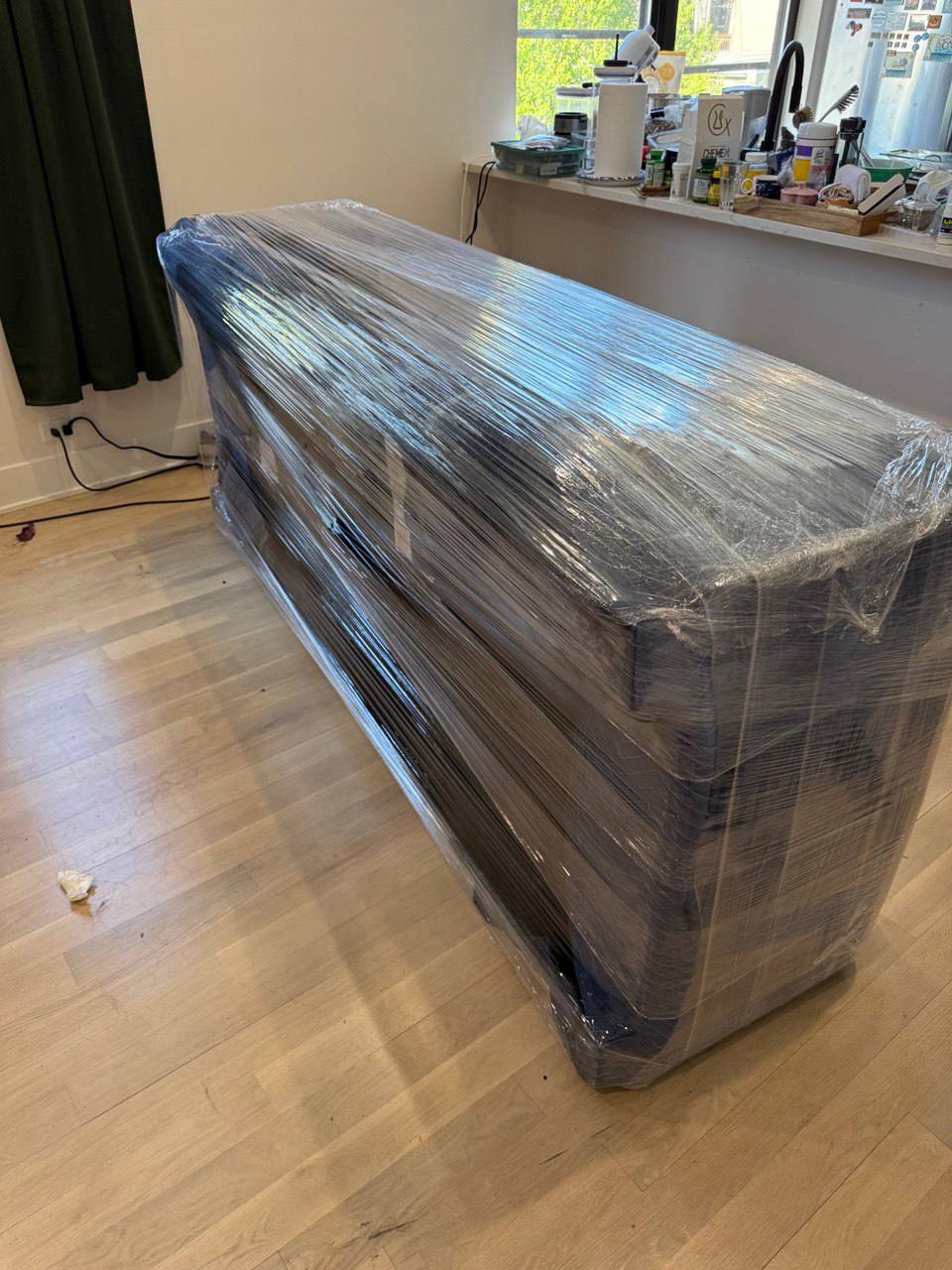
Why Furniture Is Sometimes Disassembled Before a Move
Furniture is disassembled primarily to make handling easier.
A large piece may fit inside a room perfectly well but become difficult to move through the doorway or around a tight hallway corner.
Disassembly can reduce:
- overall dimensions;
- weight;
- awkwardness;
- risk of hitting walls or door frames;
- difficulty navigating stairs;
- difficulty fitting inside an elevator.
For example, a large bed frame may be easy to use once assembled but much harder to carry through a narrow apartment hallway in one piece.
Taking it apart can turn one awkward object into several manageable components.
However, disassembly is not automatically better.
Some furniture is stronger and more stable when left assembled, and unnecessary disassembly creates additional work and introduces the possibility of losing hardware or damaging connections.
The objective is therefore selective disassembly, not taking apart everything in the home.
Which Furniture Usually Needs to Be Disassembled?
Furniture that is large, bulky, modular, or difficult to maneuver is the most likely to benefit from disassembly.
Common examples include:
- bed frames;
- large dining tables;
- sectional sofas;
- wardrobes;
- large desks;
- bookcases;
- entertainment centers;
- modular furniture;
- some cabinets;
- furniture with removable legs.
The actual decision depends on the construction of the piece and the route it needs to travel.
A dining table with removable legs may be easier to transport with the legs removed.
A modular sectional may already be designed to separate into multiple sections.
A small side table, on the other hand, may not benefit from being taken apart at all.
How to Decide Whether a Piece Should Be Disassembled
Before taking furniture apart, look at the complete route from its current location to the moving truck.
Consider:
- The furniture's dimensions
- Doorway width and height
- Hallway width
- Tight corners
- Staircase dimensions
- Elevator size
- Distance to the truck
- Whether the furniture has removable components
The question is not simply:
Will it fit through the door?
It is:
Can it be safely maneuvered through the entire route?
A sofa may fit through a doorway but still be difficult to rotate through a narrow hallway.
A wardrobe may fit through the apartment door but not through the elevator.
A table may fit into the elevator but be too wide to turn inside it.
Looking at the complete route gives you a much better answer.
Beds and Bed Frames
Bed frames are among the most common pieces of furniture that benefit from disassembly.
A typical bed may contain:
- headboard;
- footboard;
- side rails;
- support slats;
- center support;
- legs;
- hardware.
Removing selected components can make the frame considerably easier to carry.
If the bed has drawers or removable storage sections, empty them before moving.
Mattresses should also be separated from the frame.
What About Platform Beds?
Platform beds vary significantly in construction.
Some can be separated easily, while others are designed as a single structural unit.
Do not force connections that are not intended to come apart.
If you are unsure how the frame is assembled, check the manufacturer's instructions if available or let the moving crew determine the safest approach.
Dining Tables
Large dining tables often become difficult because of their width rather than their weight alone.
If the table has removable legs, taking them off can make it easier to:
- pass through doorways;
- navigate hallways;
- use an elevator;
- carry it down stairs;
- load it efficiently.
Before removing the legs, identify how the hardware is attached and keep all components together.
If the tabletop has extensions or leaves, remove them separately and protect them appropriately.
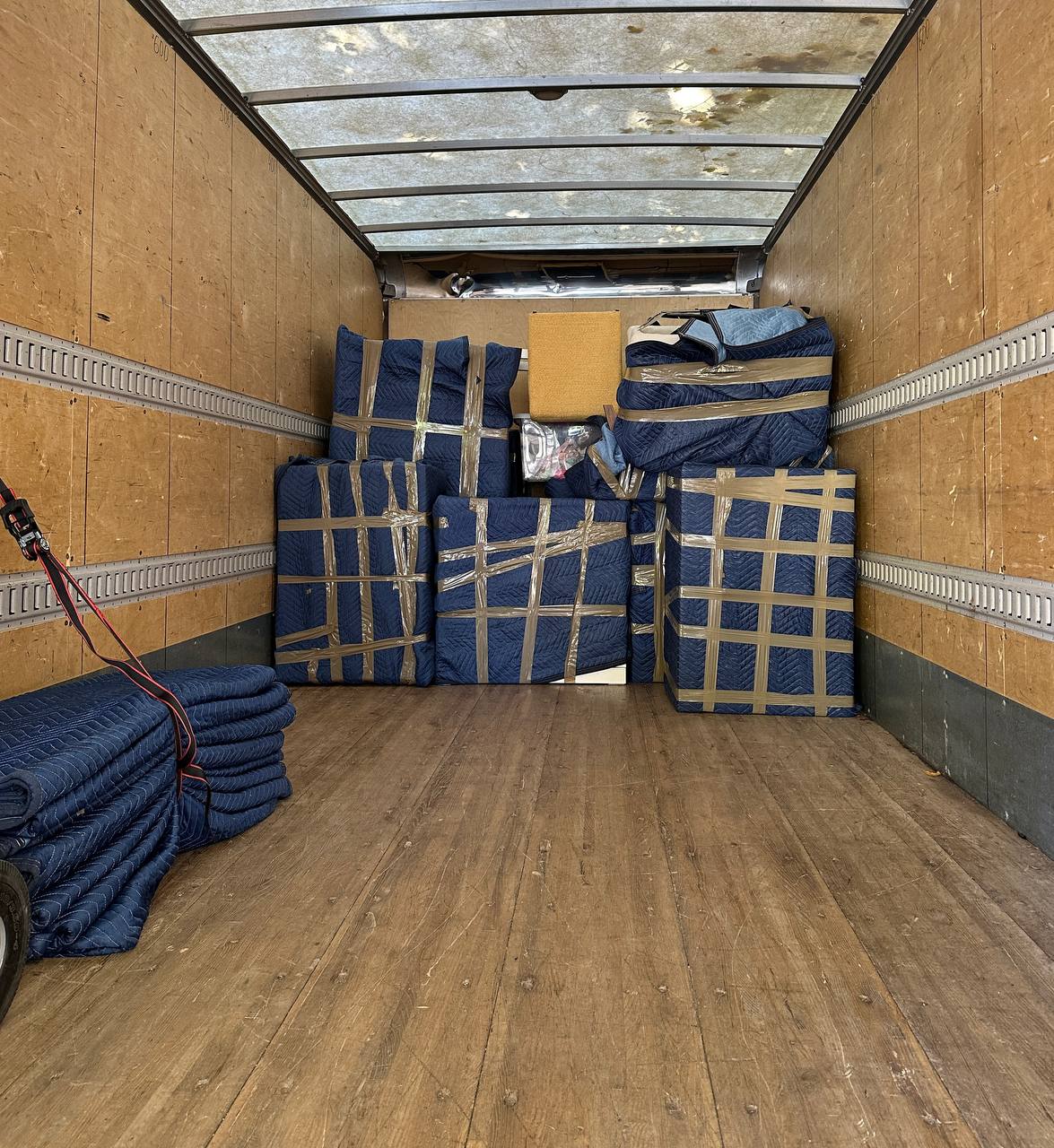
Sectional Sofas
Sectional sofas are often easier to move when separated into their individual sections.
Many sectional designs are specifically constructed from multiple pieces.
Before moving one, determine:
- where the sections connect;
- whether they lock together;
- whether the legs can be removed;
- whether cushions should be removed;
- whether any reclining or electrical components require special handling.
Do not pull connected sections apart by force.
Some sectional connectors require a specific lifting or releasing motion.
If the configuration is complicated, professional movers can usually determine how the pieces should be separated and protected.
Wardrobes and Large Cabinets
Large wardrobes and cabinets are often among the most challenging pieces in an apartment move.
Their height and depth can make them difficult to rotate through a doorway or hallway.
Before moving them:
- remove all contents;
- remove shelves when appropriate;
- remove drawers if they can be safely removed;
- secure doors;
- determine whether the main frame can or should be disassembled.
Do not assume that every cabinet should be taken apart.
Some furniture uses permanent joints or specialized construction that should not be separated.
In those cases, it may be safer to move the piece intact using appropriate handling techniques.
Desks and Home Office Furniture
Large desks often have multiple components that can make them awkward to carry.
Consider removing:
- drawers;
- legs;
- detachable shelves;
- monitor stands;
- removable panels.
Keep hardware together and identify which parts belong to which piece.
This becomes especially important when several pieces of furniture are being disassembled at the same time.
A small bag of unidentified screws is not useful when you are trying to reconstruct a desk at the new home.
Bookcases and Shelving
Bookcases can be deceptively heavy.
The books should always be removed before attempting to move the unit.
Then determine whether:
- shelves are removable;
- doors can be removed;
- the frame separates;
- the unit is designed to be disassembled.
Tall shelving units may also be easier to carry when shelves and doors are removed.
But if the frame is permanently constructed, trying to dismantle it can cause more problems than it solves.
What Furniture Should Usually Stay Assembled?
Not every piece benefits from disassembly.
Furniture may be better left intact when it is:
- small;
- structurally stable;
- easy to carry;
- unlikely to encounter tight turns;
- not too heavy;
- not too large for the elevator or doorway.
Examples may include:
- small side tables;
- simple chairs;
- compact nightstands;
- small stools;
- lightweight shelving.
Taking apart a simple piece unnecessarily can create additional work without providing a meaningful benefit.
The best approach is to assess the actual route and the construction of the furniture.
What About IKEA and Flat-Pack Furniture?
Flat-pack furniture presents a special consideration because it is designed to be assembled from separate components.
Some pieces can be disassembled relatively easily.
Others become less stable after repeated assembly and disassembly.
If the furniture has already been assembled several times, inspect the joints and hardware before deciding whether to take it apart again.
Pay particular attention to:
- stripped screws;
- weakened joints;
- damaged particleboard;
- missing fasteners;
- connectors that no longer hold tightly.
If a piece has become structurally weak, disassembling it may not make it safer to move.
Should You Disassemble Furniture Yourself?
You can disassemble furniture yourself if you understand how it is constructed and have the necessary tools.
However, there is an important distinction between simple preparation and structural disassembly.
Removing table legs or taking a bed frame apart may be straightforward.
Taking apart a large wardrobe, complicated sectional, or specialized furniture can be much more involved.
If you are not confident that a piece can be safely reassembled, it may be better to leave the task to experienced movers.
The cost of a small amount of professional labor can be easier to manage than discovering at the new home that a critical connection was damaged during disassembly.
How to Keep Furniture Hardware Organized
Hardware is one of the easiest things to lose during a move.
For every disassembled piece, keep its hardware together.
A simple system is:
One furniture piece = one labeled hardware bag.
For example:
- Bed hardware
- Dining table hardware
- Desk hardware
- Bookshelf hardware
Place the screws, bolts, washers, and other small components into a sealed bag and label it clearly.
Then keep that bag with the corresponding furniture rather than putting all hardware from the entire home into one container.
Take Reference Pictures
Before disassembling complicated furniture, photographs can help you remember:
- how components connect;
- where cables run;
- which direction pieces face;
- where hardware belongs.
This can be particularly useful for home office furniture and entertainment centers.
The goal is not to document every screw in a simple table.
Use this approach when the construction is complicated enough that you may not remember the assembly sequence later.
What Should You Remove From Furniture Before Movers Arrive?
Furniture should generally be emptied before it is moved unless a specific arrangement has been made otherwise.
Remove:
- books;
- clothing;
- dishes;
- decorations;
- electronics;
- personal belongings;
- loose objects.
Drawers should generally be emptied as well, particularly when they contain heavy belongings.
An empty dresser is considerably easier to handle than a dresser loaded with clothing and other items.
If drawers are removable and taking them out makes the furniture easier to carry, they may be separated and handled individually.
What About Large Appliances?
Large appliances require a different type of preparation because they often involve connections to utilities.
Examples include:
- refrigerators;
- washing machines;
- dryers;
- dishwashers.
Do not assume that an appliance can simply be disconnected and moved like a piece of furniture.
Water, electrical, or gas connections may require appropriate preparation before moving.
For appliances that require disconnection, follow the manufacturer's instructions or arrange appropriate professional assistance.
The important point is to have appliances prepared before the movers need to transport them.
Furniture Preparation for Chicago Apartments
Furniture preparation becomes particularly important in Chicago apartment buildings because the route may include several restricted or narrow areas.
A large piece may need to pass through:
Apartment hallway elevator lobby entrance sidewalk truck
Every section of that route can create a different challenge.
For high-rise and condo moves, elevator dimensions and building access are particularly important.
For walk-up apartments, stairs and landings become the primary concern.
For buildings with narrow hallways, furniture may need to be disassembled before it can be maneuvered safely.
This is why furniture preparation should be considered together with the building's access conditions.
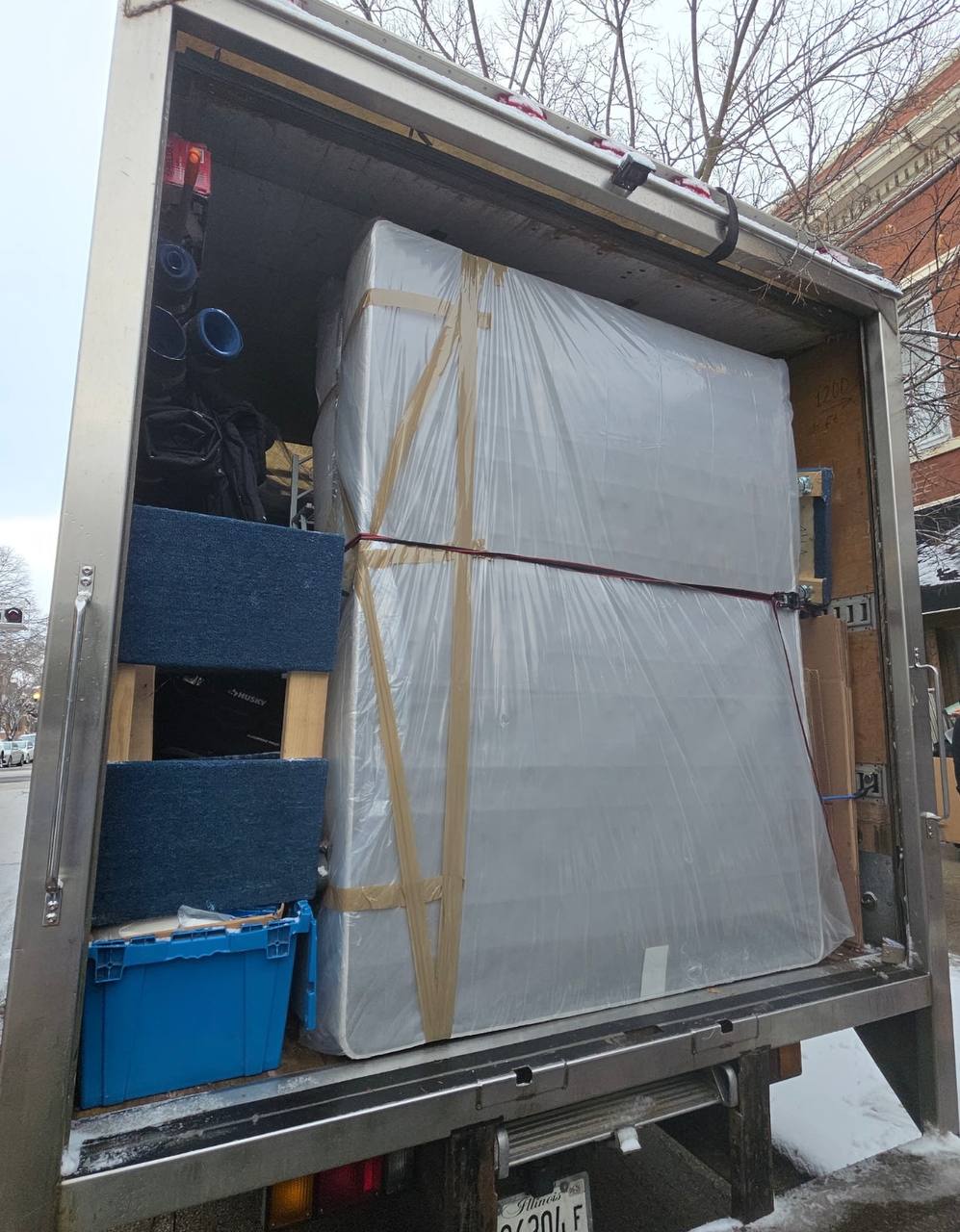
What If the Elevator Is Small?
A small elevator does not necessarily mean large furniture cannot be moved.
Movers may be able to change the orientation of the furniture or separate components to reduce its dimensions.
But there is a limit to what can be safely maneuvered.
Before moving day, measure the elevator if you are concerned about a particular piece.
Important measurements include:
- elevator door width;
- elevator door height;
- interior width;
- interior depth;
- ceiling height.
Compare these dimensions with the furniture in its intended carrying position.
Remember that a measurement that works on paper may still be difficult if the elevator has rails, doors, handrails, or other interior features that reduce usable space.
What If the Furniture Does Not Fit Through the Door?
If furniture cannot pass through the doorway in its current form, there are several possibilities.
The piece may be:
- partially disassembled;
- rotated differently;
- moved through another entrance;
- carried through another route;
- separated into sections.
Do not immediately assume that removing a door or making structural changes to the property is necessary.
First determine whether the furniture itself can be safely reduced in size.
If the piece is still too large after reasonable disassembly, discuss the available options with the moving crew.
Protecting Furniture During Disassembly
Disassembly does not eliminate the need for furniture protection.
Once furniture has been separated into components, those components still need to be handled and transported carefully.
Pay attention to:
- corners;
- finished surfaces;
- glass;
- hardware;
- exposed joints;
- delicate decorative elements.
Keep components together and prevent smaller parts from rubbing against finished surfaces.
For example, detached table legs should not simply be placed loose against a polished tabletop.
The objective is to protect both the furniture and the individual components while they are being handled.
A Simple Furniture Preparation Plan
A practical preparation process looks like this.
Step 1: Identify Oversized Pieces
Walk through the apartment and identify furniture that may be difficult to move through the building.
Step 2: Check the Route
Look at doors, hallways, stairs, elevators, and building entrances.
Step 3: Determine What Can Be Reduced
Check whether legs, shelves, drawers, cushions, doors, or sections can be safely removed.
Step 4: Empty the Furniture
Remove belongings, drawers' contents, shelves' contents, and loose objects.
Step 5: Organize Hardware
Place hardware for each piece into a separate labeled bag.
Step 6: Protect Components
Keep detached parts protected and associated with the correct furniture.
Step 7: Communicate Special Items
Tell the moving company about unusually large, heavy, fragile, or complicated furniture before moving day.
This preparation can prevent last-minute decisions when the crew arrives.
Common Furniture Moving Mistakes
Disassembling Everything
More disassembly does not automatically mean an easier move.
If a piece is already easy to carry safely, taking it apart only adds work.
Losing Hardware
A handful of screws can look insignificant until you discover that they are required to reconstruct an entire bed or desk.
Mixing Hardware
Putting all screws from multiple pieces into one container makes reassembly unnecessarily difficult.
Forgetting the Route
Furniture may fit through the apartment door but fail at the elevator or a narrow hallway.
Leaving Drawers Full
Heavy drawers can add unnecessary weight and may shift during handling.
Waiting Until the Movers Arrive
If a large piece obviously needs preparation, discovering this only when the moving crew arrives can slow down the process.
Forcing Furniture Apart
If a connection does not release normally, do not use excessive force. You may damage the furniture.
When Professional Furniture Disassembly Makes Sense
Professional furniture disassembly can be particularly useful when a piece is:
- unusually large;
- structurally complicated;
- expensive;
- difficult to maneuver;
- difficult to reassemble;
- made from delicate materials;
- part of a larger modular system.
It can also make sense when you simply do not have the time or tools to prepare the furniture yourself.
The goal is not to outsource every screw and bolt.
It is to avoid turning a complicated piece of furniture into an unnecessary moving-day problem.
Furniture Disassembly and Partial Packing Are Different Decisions
Packing and furniture preparation are related, but they are not the same service.
You may choose partial packing because you want professional help with kitchenware and fragile belongings while still handling most of the household yourself.
At the same time, you may want the moving crew to disassemble certain large furniture pieces because of their size or the building's access conditions.
This means a move does not have to follow a single all-or-nothing model.
You can decide separately:
- what you pack yourself;
- what professionals pack;
- what furniture needs disassembly;
- what furniture can remain assembled;
- what belongings stay with you.
That flexibility is particularly useful for apartment moves where the physical route can vary significantly from one building to another.
The Best Way to Prepare Furniture for Movers
The best furniture preparation starts with the route rather than the furniture itself.
Before moving day, ask:
Will this piece fit through every part of the route?
If yes, it may not need disassembly.
If no, determine which components can be safely removed without compromising the furniture.
Then:
- empty it;
- remove appropriate components;
- organize the hardware;
- protect the separated pieces;
- communicate unusual furniture to the moving crew.
This approach avoids unnecessary disassembly while addressing the pieces that genuinely create a logistical challenge.
Final Takeaway
Not every piece of furniture needs to be taken apart before a move. Disassemble furniture when doing so makes it safer or more practical to move through the actual route from the apartment to the truck.
Beds, large tables, sectional sofas, wardrobes, desks, and modular furniture are common candidates, but the decision depends on their construction and the conditions of the building.
For Chicago apartment and condo moves, consider the entire route: doorways, hallways, stairs, elevators, entrances, and loading areas.
If a piece is easy to carry as it is, leave it assembled.
If it is too large, awkward, or difficult to maneuver, selective disassembly may make the move significantly easier.
And when a piece is complicated or you are unsure how it should be taken apart, professional movers can help determine the safest way to prepare it.